The Car: 2011 A4 2.0T, 78,000 Miles
The owner brought the car in because it had failed an oil consumption test at another shop — the first shop had done the test, confirmed the consumption rate, and quoted the piston ring repair. The owner wanted a second quote and a second opinion. The car ran well: no smoke from the exhaust, no check engine light, no obvious signs of distress. Just disappearing oil.
We confirmed the consumption rate with our own test: oil filled to max at a known point, driven 1,000 miles of mixed use, measured down 0.85 quarts. That's within the range where Audi's extended warranty program would have covered the repair on a younger car, and clearly outside acceptable bounds for a well-maintained daily driver.
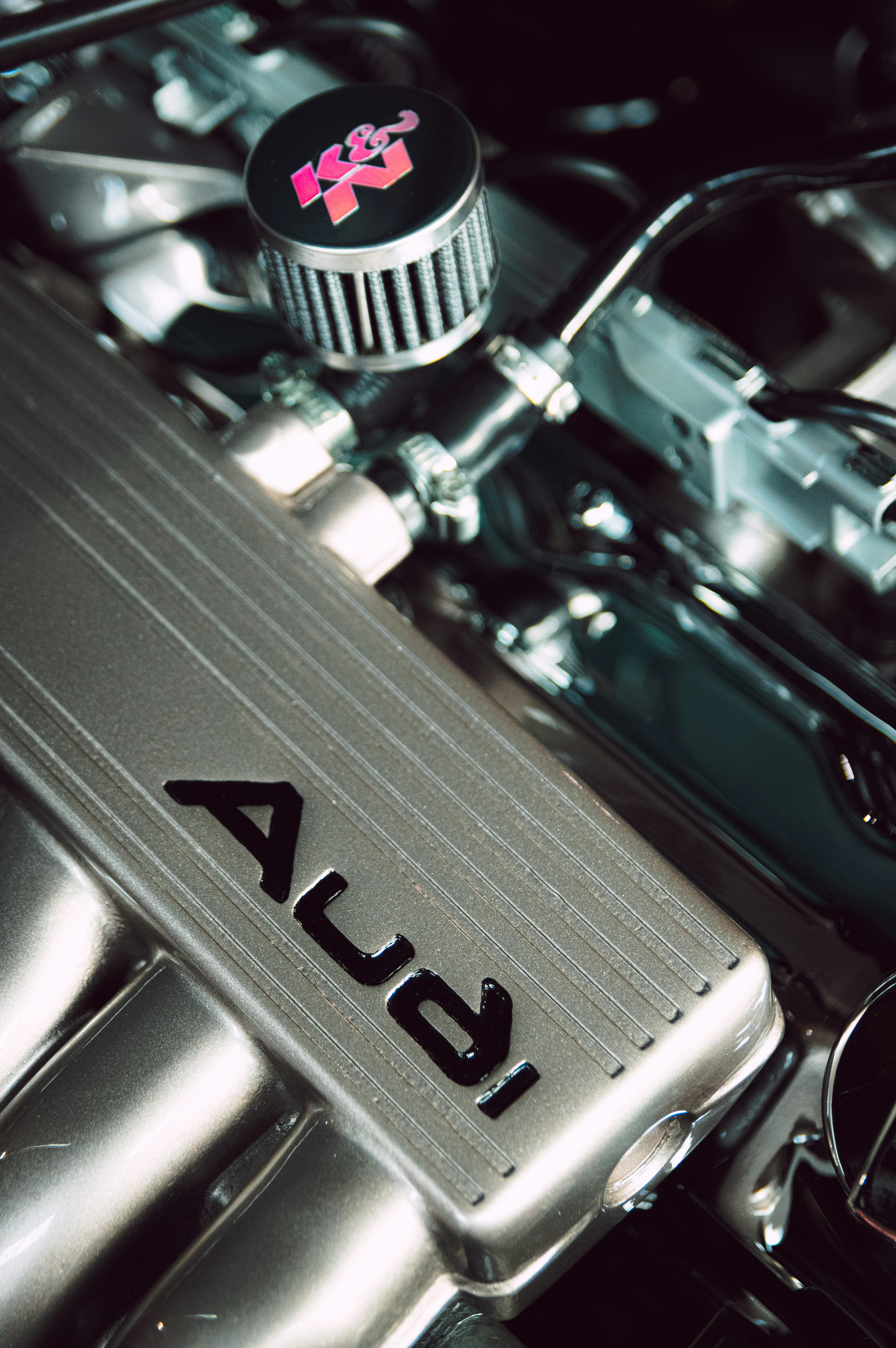
Audi 2.0T — engine access during piston ring diagnosis.
Before the Teardown: What We Checked First
Before recommending piston ring replacement on a high-cost repair, a responsible shop rules out simpler causes. We checked: PCV system integrity (a failed PCV valve can pull oil through the intake — not the same repair), valve stem seals (a different failure mode with different symptoms, usually blue smoke at startup), turbocharger oil seals (oil seeping past turbo seals goes into intake; the car would show blue smoke under boost if severe). All three checked out fine. The consumption pattern — oil disappearing without smoke, without codes, without drivability symptoms — pointed squarely at the piston rings.
The Teardown
Piston ring access requires removing the cylinder head to pull the pistons. On the 2.0T TFSI the sequence: drain coolant and oil, remove the intake manifold, disconnect the turbocharger oil and coolant lines, remove the exhaust manifold, unbolt the head. With the head off, the pistons are accessible from above after removing the main bearing caps and pushing each piston down from the top of the bore.
What we found: the oil control rings (the lowest of the three ring grooves) on cylinders 1 and 4 showed visible carbon glazing on the ring lands — the grooves they sit in. Carbon buildup in the ring land prevents the oil control ring from conforming to the cylinder wall, leaving an oil film that gets drawn into combustion. Cylinders 2 and 3 showed less severe but similar conditions. This is the classic EA888 Gen 1 failure mode exactly as described in Audi's technical service literature.
Parts Used
Audi's revised piston ring set for the EA888 Gen 1 uses an updated oil control ring with a different spring tension and face profile than the originals. The part supersession history on this component is long — Audi revised it multiple times. We used the current revision. Along with the rings: new piston pin circlips, new head bolts (stretch bolts, single-use), new head gasket, new intake manifold gaskets, new exhaust manifold gasket, new valve cover gasket, and fresh coolant.
We also inspected the cylinder bores for scoring or out-of-round condition before reinstalling. Bores measured within spec — no ridge at the top of travel, no scoring. A bore with significant wear would require machining or engine replacement; this one was clean.
Reassembly and Verification
Reassembly is the reverse of teardown with specific torque sequences for the head bolts (angle-torque method, not a single torque figure), proper cam timing verification with specialty diagnostic equipment after startup, and a leak check before returning the car. The engine started on first crank and ran smoothly. Cam timing confirmed within spec on both banks and no fault codes stored.
The Result: 5,000 Miles Later
The owner checked in at 1,000 miles, 3,000 miles, and 5,000 miles post-repair. Oil level at 5,000 miles: down 0.2 quarts from max. That's within the normal consumption range for any turbocharged engine under varied use. The repair achieved exactly what it was supposed to: piston rings that seat correctly and don't allow oil to bypass into the combustion chamber.
Is the Repair Worth It?
On a car with documented service history, no other major mechanical issues, and reasonable miles (under 120,000), the answer is usually yes. The A4 B8 platform is otherwise solid — the oil consumption issue is the known weak point, and fixing it addresses the primary long-term risk. A car that has had the piston ring replacement done correctly is worth keeping.
On a high-mileage car with questionable history or multiple deferred services, run the numbers carefully. The repair cost should be weighed against the car's realistic value post-repair and what other services it needs. We'll give you an honest assessment after the pre-repair inspection.