Brake Fluid — The Most Skipped Service
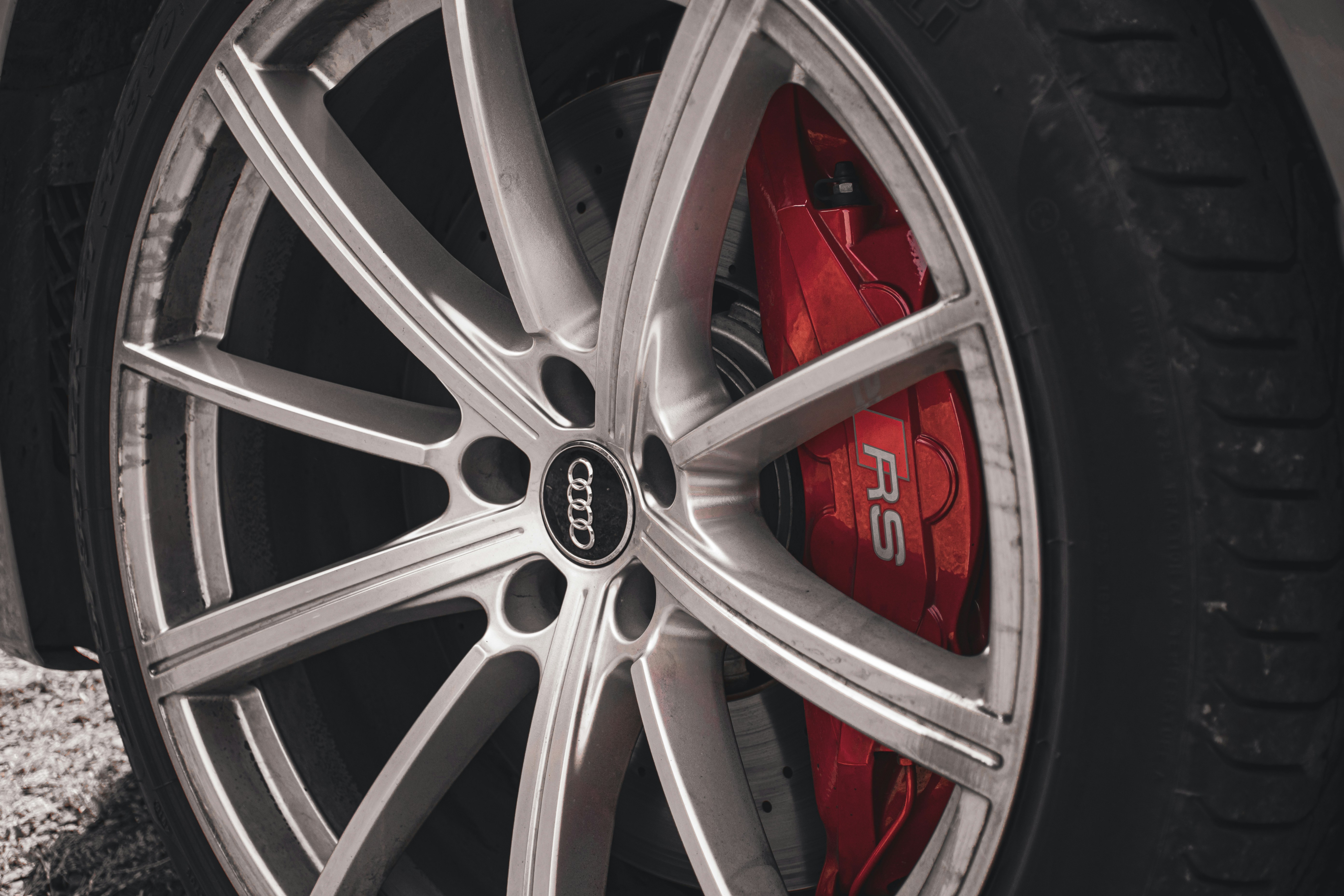
Audi RS brake system — pad, rotor, and caliper service.
Brake fluid is hygroscopic — it absorbs moisture from the atmosphere over time. As moisture content increases, the fluid's boiling point decreases. Audi specifies brake fluid replacement every 2 years regardless of mileage, and this interval exists for good reason: in Southern California's dry climate, brake fluid can still absorb enough moisture in 24 months to meaningfully reduce its wet boiling point, increasing the risk of vapor lock under hard braking.
Audi specifies DOT 4 fluid meeting SAE J1703 with a dry boiling point above 230°C. Higher-performance options (Pentosin Super DOT 4+, Motul RBF 600) offer additional boiling point margin for performance applications. Do not use DOT 3 — its lower boiling point specification doesn't meet Audi's requirement.
Pads and Rotors — Replacing as a System
Audi rotors are larger and more complex than comparable domestic vehicles, and they're designed to be replaced with the pads as a system rather than resurfaced. Audi's minimum rotor thickness specifications are conservative — by the time a rotor has worn to minimum thickness, it has significantly less thermal mass than a new rotor and doesn't dissipate heat effectively. Replacing rotors and pads together at pad replacement intervals is the correct approach, not the upsell it's sometimes characterized as.
Electronic Parking Brake — The Complication
B8.5 onward Audi models use an electronic parking brake (EPB) that integrates the parking brake motor into the rear caliper. Rear brake service on these cars requires using a scan tool to retract the EPB piston before compressing the caliper — the mechanical C-clamp method used on older calipers will destroy the EPB motor. Any shop servicing an Audi rear brake without EPB capability is a shop that will damage your caliper. Verify before authorizing the work.
Brake Pad Sensor — Audi's Warning System
Most Audi models use wear sensors embedded in one or more brake pads. When the pad wears to minimum thickness, the sensor contacts the rotor and triggers a warning light. The warning light means the pads are at minimum — not that you have some time left. Replace the pads immediately when the warning appears, and replace the sensor with the new pads; reusing a triggered sensor is unreliable.
Caliper Service
Brake calipers on Audi vehicles typically last 100,000–150,000 miles before the slide pins and seals require service or the caliper develops a leak. At any brake job on a high-mileage car, inspect the calipers for: sticky slide pins (uneven pad wear is the symptom), caliper piston seal condition, and caliper body corrosion. In Simi Valley's relatively dry climate, caliper corrosion is less aggressive than in coastal or wetter markets, but it still occurs on cars with deferred service.